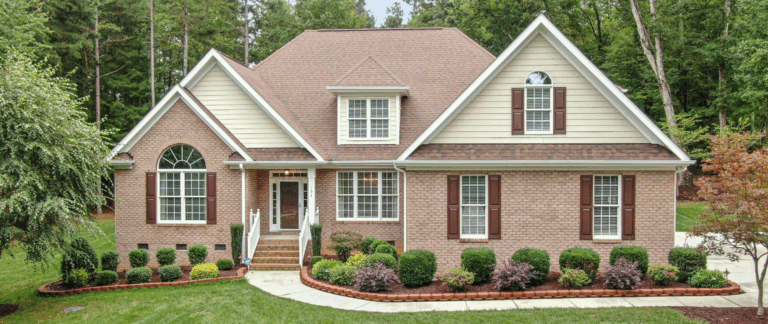

For many first-time or cash-limited homebuyers, the dream hinges on two powerful tools: the low-down-payment FHA loan and Down Payment Assistance (DPA). An FHA loan lets you buy a home with just 3.5% down if your credit score is 580 or higher. Down Payment Assistance programs can provide the funds to cover that exact 3.5% down payment and often your closing costs too. This combination effectively unlocks homeownership with minimal cash required upfront.
This strategy is ideal if you have steady income, decent credit (meeting FHA’s standards), but lack significant savings for the down payment and closing costs. You demonstrate creditworthiness through your payment history and debt-to-income ratio, but traditional 3% to 20% down payments remain out of reach.
While this FHA + DPA combo is incredibly powerful, successfully combining them demands careful navigation. The biggest pitfalls? Accidentally applying for conflicting programs and underestimating the critical timing needed to close. Master these, and you unlock the door.
Understanding FHA Loans and Their Requirements
FHA loans are government-backed mortgages designed to make it easier for people to buy homes. These loans, which are insured by the Federal Housing Administration, have flexible qualification standards that can help many buyers who may not qualify for traditional financing.
- Minimum Credit Score: Most lenders require a minimum credit score of 580 to qualify for the 3.5% down payment option. Some programs or lenders accepting down payment assistance may set their threshold at a minimum credit score of 600.
- Debt-to-Income Ratio (DTI): The FHA typically allows a maximum DTI ratio of 43%, though some lenders may approve up to 50% with strong compensating factors. This means your total monthly debt payments — including the projected mortgage — should not exceed 43% of your gross monthly income.
- Primary Residence: The property must serve as your primary residence. Investment properties and vacation homes do not qualify for FHA financing.
- Loan Limits: FHA loan limits are set by county and property type. For example, in 2024, limits range from $498,257 in low-cost areas to $1,149,825 in high-cost regions for single-family homes.
- Income Verification: Lenders require steady employment or consistent income history, usually documented through recent pay stubs, W-2s, or tax returns.
- Florida Market Friendly: Ideal for real estate investors, entrepreneurs, and gig workers in high-demand areas like Miami, Orlando, and Tampa.
Borrowers must also intend to occupy the home within 60 days of closing and maintain it as their primary residence for at least one year. Meeting these FHA loan requirements sets the foundation for pairing an FHA loan with down payment assistance programs.
What is Down Payment Assistance? Types and Sources
Down Payment Assistance Programs (DPAs) offer financial support to homebuyers who struggle with upfront costs, such as the down payment and sometimes closing costs. These programs do not come from the federal government directly but are funded and managed by third-party organizations.
Common Types of DPA Programs
Before diving in, get familiar with the common forms Down Payment Assistance takes. While specific names and rules vary by location, most DPA programs fit into these core categories:
- Grants for Down Payment Assistance: These are funds provided with no repayment requirement if program guidelines are met. Typically, grants pay part or all of the down payment and, occasionally, closing costs.
- Forgivable Loans: Structured as second mortgages, these loans are forgiven after a set period—often five to ten years—if the buyer remains in the home as their primary residence. For example, 20% of the loan might be forgiven annually over five years, so long as you don’t move or refinance.
- Deferred-Payment Loans (Silent Second Mortgages): No monthly payments required until you sell, refinance, or pay off the primary mortgage (or after 30 years). At that point, you repay the full amount borrowed; interest may or may not accrue during the life of the loan.
- Low-Interest Second Mortgages: These are traditional second loans with a low, fixed interest rate and a set monthly payment term (e.g., 10 or 15 years). You make regular repayments alongside your main mortgage payment.
- Matched Savings Programs (Individual Development Accounts): Buyers deposit money into a designated account, and the sponsoring organization matches contributions up to a set limit.
- Employer-Provided Assistance: Some employers offer direct financial help or match savings toward buying a home.
Typical Sources of DPA
State and local housing finance authorities often run their own programs designed to meet community housing needs.
HUD-approved nonprofit organizations help first-time homebuyers through grants or secondary loans.
Employers may offer housing benefits such as matching funds or direct grants.
Certain mortgage lenders partner with state agencies or nonprofits to provide DPA options directly to borrowers.
The crucial point here is compatibility. You don’t need to worry if DPA generally works with FHA – the vast majority of DPA programs are explicitly designed for use with government-backed loans like FHA, VA, and USDA. State Housing Finance Agencies (HFAs), local governments, and nonprofits structure their DPAs knowing buyers will use FHA financing. Focus your search on programs listed by your state HFA or reputable local homebuyer assistance providers; they inherently understand this synergy. Don’t get bogged down in deep mechanics of each type yet – first, identify which types are available to you.
Eligibility Requirements for Combining FHA Loans with DPA Programs
Combining Down Payment Assistance (DPA) with an FHA loan involves meeting certain eligibility requirements:
First-Time Buyer Status
Most DPA programs require first-time homebuyers, usually meaning no property ownership in the last three years. Some allow exceptions for life changes like divorce or displacement.
Income Limits
DPA programs often help low-to-moderate income households and set income limits based on area median income (AMI). These limits vary by location and household size, so it’s important to check them before applying.
Credit Score Thresholds
While FHA loans have a minimum credit score requirement of 580 for a 3.5% down payment, some DPA programs may set higher thresholds. Ensuring that your credit score meets both FHA and DPA criteria is essential.
Homeownership Education Courses
Many DPAs require completion of a homeownership education course before approval. These courses provide valuable information on budgeting, mortgage payments, and maintaining your new home.
How to Find Local and State DPA Programs Compatible with FHA Loans
Identifying the right down payment assistance (DPA) program for use with an FHA loan starts with reliable, up-to-date resources. The U.S. Department of Housing and Urban Development (HUD) provides a national HUD down payment assistance directory that lists approved organizations by state. This directory includes nonprofit agencies, community organizations, and local government programs authorized to provide mortgage and down payment support.
1. Use the HUD Directory
Search by state or zip code to find approved DPA providers. Each listing details program types, eligibility requirements, and contact information for further guidance.
2. State Housing Finance Authority Resources
Every state has a housing finance agency (HFA) responsible for administering homebuyer assistance programs. These agencies publish current lists of available DPAs, many of which are designed specifically to work with FHA loans.
- Visit your state HFA’s website for application instructions, eligibility calculators, and lender lists.
- Explore local city or county housing departments for additional grant or loan options.
3. Consult Local Experts
Real estate agents specializing in first-time homebuyer transactions often know about regional programs beyond those listed in federal directories.
Eligibility and program terms change frequently, so confirm details directly with each organization before applying or making decisions about your FHA loan application. This diligence ensures you work only with recognized programs that coordinate smoothly with FHA guidelines.
Key Considerations When Using Down Payment Assistance with an FHA Loan
Nearly all reputable DPA programs are structured to work with government-backed loans, including FHA. Still, each program’s structure — whether grant, forgivable loan, or deferred second lien mortgage — comes with specific guidelines that must align with FHA requirements.
Types of DPA Programs and FHA Compatibility
The following types of down payment assistance programs are compatible with FHA loans:
- Forgivable Loans: Many DPAs offer forgivable loans that dissolve after living in the home for a set period (often 5–10 years). The FHA permits these as long as the source is a government agency or HUD-approved nonprofit. The terms must not require repayment unless the borrower sells, refinances, or moves out before the forgiveness period ends.
- Deferred Second Lien Mortgages: Some DPAs provide assistance via a silent second mortgage, which is not paid monthly but becomes due if you sell or refinance. FHA guidelines allow these, provided they come from approved sources and do not violate maximum allowable debt-to-income ratios.
- Grants and Matched Savings: Grants do not require repayment and are fully compatible with FHA loans. Matched savings programs—where your contributions are matched by a nonprofit or government agency—also meet FHA rules if properly documented.
Verifying each program’s terms against FHA standards prevents issues at underwriting. Not all lender products qualify; some private DPAs may have restrictions.
Best practices include:
- Work with your lender to ensure only one DPA covers each part of your upfront costs.
- Confirm all documentation clearly outlines how much each source contributes.
- Check that any deferred or forgivable second liens comply with both FHA and local agency rules.
Lender compatibility with DPA programs is important because experienced lenders have connections with housing agencies and nonprofits, can quickly verify eligibility, resolve issues, and understand documentation, timelines and funding procedures which reduces errors. They also speed up application reviews and approvals, help avoid duplicate paperwork and conflicting requests, interpret complex rules on income, location, loan limits and occupancy, and coordinate directly with agencies to confirm funding and structure documentation so that funds are released on time and the closing is not delayed.
Careful coordination makes your loan package stronger and helps sidestep last-minute denials due to technicalities. This step preserves eligibility for both the FHA loan and valuable down payment help, preventing unnecessary setbacks during closing.
Avoiding Duplication and Program Conflicts
Combining FHA and DPA works best with one well-chosen assistance program. Applying for multiple DPAs simultaneously often backfires due to strict rules against duplication. Here’s where conflicts typically arise:
- The 3.5% Minimum Investment Rule: FHA mandates that you, the borrower, must contribute a minimum 3.5% down payment. Crucially, DPA funds are legally considered your contribution. Trying to use another DPA source (like a second grant or loan) to cover this same 5% creates duplication. Example: If Program A gives a 4% grant, you cannot also apply for Program B offering a 2% grant just to cover part of that same down payment requirement. Lenders must source the DPA funds correctly on the Closing Disclosure to satisfy FHA and the DPA provider.
- Specific Use Restrictions: DPA programs have defined purposes. One grant might cover only the down payment, while another targets only closing costs. Applying for two programs both claiming to cover your $5,000 in closing costs creates an overlap that violates program guidelines and gets your application rejected.
- Conflicting Eligibility Rules: Qualifying for one DPA based on your $70,000 income and the home’s location in County X doesn’t mean you automatically qualify for another. A different program might have a $65,000 income cap for your family size, or exclude properties in specific zip codes within County X. Applying for conflicting programs wastes time and raises red flags.
Therefore, work with one experienced FHA/DPA lender from the start. Their expertise is critical for identifying the single, optimal DPA program that aligns perfectly with your FHA loan, financial picture, and the property. This eliminates duplication risk at the source and streamlines your path.
1. Get Full FHA Pre-Approval & DPA Assessment
Do not settle for a simple pre-qualification. Work with a lender to get fully pre-approved for an FHA loan. Crucially, simultaneously have them assess your eligibility for specific DPA programs based on your income, credit, and the home’s location. This tells you exactly what assistance you can access before you house hunt.
2. Identify the ONE Optimal DPA Program
Rely on your lender’s expertise and resources (such as your state’s Housing Finance Agency website) to select the single best DPA program (grant, forgivable loan, silent second mortgage) for your situation. Applying for multiple programs will cause disqualification due to duplication rules.
3. Initiate Applications IMMEDIATELY Upon Offer Acceptance
Your lender must file the DPA application within 1–2 business days of an accepted purchase contract. This step is often the longest, requiring extensive documentation and internal approvals that can take 3–6 weeks. Even short delays risk missing your closing date, so speed is critical.
4. Gather and Submit Consolidated Documentation
Your lender will coordinate the collection of documents for both the FHA loan and DPA application, which often overlap but may have specific requirements:
- Proof of Income (2+ years of tax returns, W-2s, recent pay stubs).
- Asset Statements (2+ months for all accounts).
- Credit Report (pulled by the lender).
- Certificate of Completion from an approved homebuyer education course.
- Signed purchase contract.
5. Manage the Process and the Timeline
Maintain close communication with your loan officer. Ensure the appraisal is ordered promptly and that it satisfies both FHA standards and any DPA program requirements, such as property condition rules or repair allowances. Ask your lender’s underwriter to communicate directly with the DPA administrator early to avoid surprises. Always build a minimum 45-day timeline into your contract to account for DPA processing, and ideally add extra buffer time.
6. Secure the DPA Commitment Letter
Before closing can be scheduled, your lender must receive a formal commitment letter from the DPA provider guaranteeing the funds. This written confirmation is non-negotiable, as you cannot close until the DPA provider has transferred funds to the title company and they are fully cleared.
7. Close with Confidence
The title company will coordinate the receipt of the DPA funds and the FHA loan proceeds. You will sign the final closing documents, and the DPA funds will be applied to your down payment and costs at the table.
Set a realistic closing date upfront. Build a minimum 2-week buffer beyond your estimated timeline solely for DPA finalization. Maintain daily communication between your loan officer, realtor, and the lender’s dedicated DPA coordinator (if they have one) – constant updates are essential to catch snags early.
Plan for DPA Hiccups and Financial Contingencies
Even with careful preparation, Down Payment Assistance funds can face delays, denials, or last-minute issues such as program depletion, stalled approvals, or missing documentation. To protect yourself, plan contingencies in advance:
Strengthen Financing Contingencies
Include a robust financing contingency clause in your purchase contract that explicitly covers both approval and funding of your chosen DPA program. This ensures you can exit the contract without losing your earnest money deposit if the DPA fails. Example:“This contract is contingent upon Buyer securing approval and funding for the [Specific DPA Program Name] by [Date].”
Identify Backup Cash Sources
Be ready to cover the minimum 3.5% down payment (e.g., $7,000 on a $200,000 home) if DPA funding is delayed or denied:
- Gift Funds: Family support documented with a gift letter and proof of donor ability.
- Savings: Using reserves you may have intended to keep untouched.
- Secured Loans: For example, a 401(k) loan, though these should be used cautiously given risks.
Discuss Alternative DPA Options Early
Ask your lender during the first consultation whether a backup DPA program is available if your primary option falls through. Learn the eligibility requirements, timelines, and differences so you can pivot quickly if needed.
Having a clear “walk away” point, defined by your contract contingency and the maximum cash you can personally contribute, prevents last-minute financial stress. Early planning with your lender ensures you remain prepared even if your initial DPA plan stumbles.
Bottom Line
The FHA and Down Payment Assistance combination remains one of the most powerful strategies for achieving homeownership without a large savings account. This path can transform the dream of owning a home into a tangible reality by covering your 3.5% down payment and closing costs.
Combining these resources especially benefits:
- First-time buyers: Those who haven’t owned a home in three years often qualify for both FHA loans and many DPA programs.
- Households earning below area median income: Most DPAs set income limits based on local conditions to target families who may struggle to save.
- Renters facing rising housing costs: The combined approach offers an entry point into ownership without years spent accumulating a large nest egg.
By strategically using both tools together, buyers can preserve savings for emergencies or future repairs instead of draining accounts at closing. This synergy not only increases affordability today — it builds financial resilience and lays the groundwork for long-term housing stability.